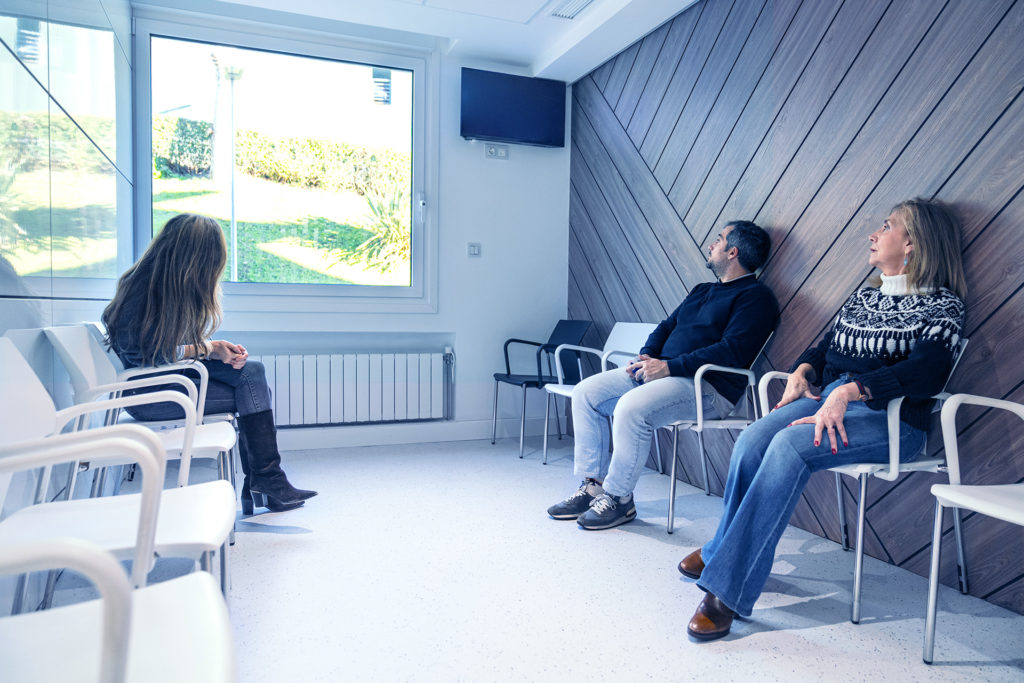
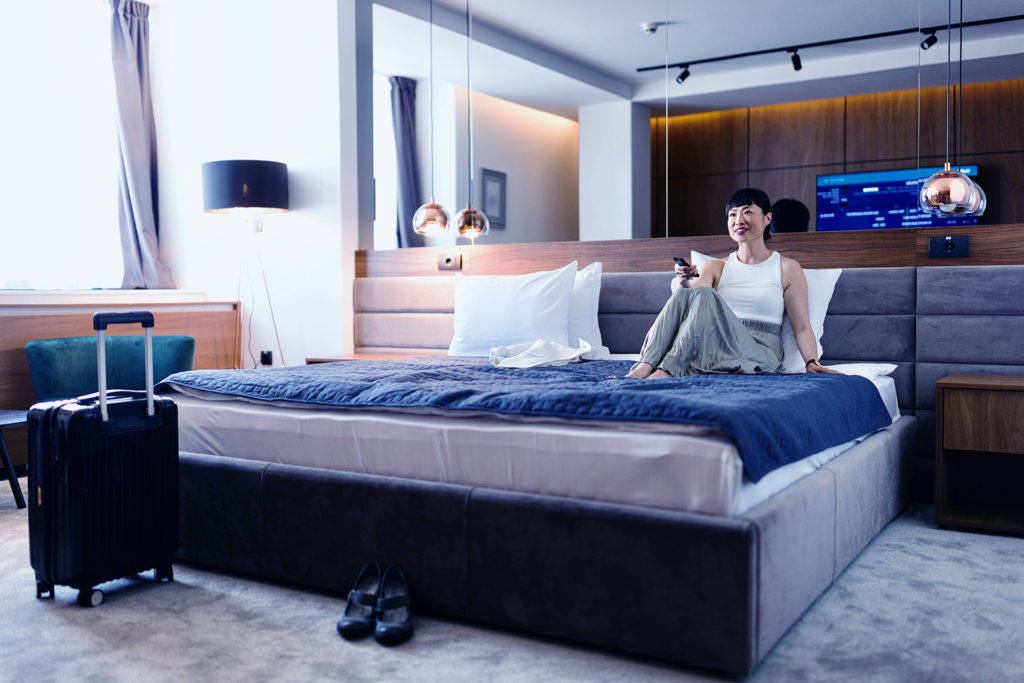
From the beginning of 2026 onwards, a licence is required for the public performance of television programmes. There are two types of licences: a lobby licence for areas with large numbers of people, such as waiting rooms or gyms, and a room licence for places like hospital or hotel rooms.
A public TV licence is normally valid until further notice. However, if a company’s operations are seasonal and suspended for part of the year, compensation is calculated only for the months during which operations are active.
You can easily obtain the licence through us. The proceeds from the licences are distributed to the creators and production companies of TV programmes through Audiovisual Producers Finland (APFI) and Kopiosto.
For showing TV programmes in public spaces
You need a licence if you want to publicly show programmes from Finnish free-to-air television channels. A licence is required if a business owner has purchased a television for their customers’ use or has installed television sets in their business premises in such a way that customers have the opportunity to use them to watch television programmes.
Simply owning a television or having one in a public space does not constitute a public performance of works. For example, if you have television sets in storage that have not been put into use – they are not connected to the power or telecommunications networks, and no channels have been set up on them – a public TV licence is not required.
If works are watched without permission, the copyright holders are entitled to claim compensation for the unauthorised use.
Well-known copyright organisations behind the licence
Public TV licences are granted by the copyright organisation Kopiosto on behalf of TV programme creators and actors, and by the copyright organisation APFI on behalf of independent production companies.
The public TV licence does not cover all programmes on domestic channels
Although the public TV licence broadly covers the key copyright holders, there may be exceptional cases where it does not cover a specific programme. For example, a broadcasting company may have acquired the public performance rights to this programme, after which it can sell separate performance licences directly to customers. These situations can arise when there are major sporting events, for example.
Public performance or space
A public performance is defined as the presentation of works in a space that is open to the public and where the participants have not been individually selected in advance. It is also considered a public performance if television programmes are shown to a comparatively large closed circle for purposes of gain (e.g. at a company’s own events). A group of more than 25 people is considered a comparatively large closed circle.
The key point is that the business owner cannot decide who uses the premises; in other words, the audience is not predetermined. For example, a company’s waiting room is such a public space. Therefore, for the purposes of the public TV licence, it does not matter how many people are present or whether admission to the venue is free or subject to a fee.
Showing programmes from recordings and streaming services
Television programmes may also be shown publicly as simultaneous live broadcasts via the broadcasters’ streaming services, provided that the terms of use of the streaming service allow this.
Showing programmes from recordings is not permitted. This applies to both recorded TV broadcasts and recorded programmes available on streaming services. The public TV licence also does not entitle you to show television programmes from paid streaming services.
Case law on the public nature of performance
The case law of the Supreme Court includes numerous decisions addressing the public nature of performances. Here are two examples:
The playing of copyrighted musical works in a taxi via the radio, cassette player and CD player in the presence of customers was deemed to constitute a public performance.
An apartment hotel offered its guests the opportunity to watch television broadcasts on the televisions in their rooms. The practice was deemed to constitute a public performance.
Public TV licence for your needs
A public TV licence consists of lobby and room licences, and you need one for each television set. The nature of the premises determines which licence is required for each television set.
For open spaces
Lobby licence
A lobby licence is a licence for televisions in public areas where people can gather to watch. With this licence, you may show and watch television programmes in areas such as waiting rooms, lobbies, gyms and other larger public customer premises.
The price of the lobby licence is €40/month/TV + 13.5% VAT (45,40 €/month)
For individual rooms
Room licence
A room licence is a licence for individual rooms where television can be watched in a small group. With this licence, you can show and watch TV programmes in places such as hotel rooms, hospital rooms, other accommodation or treatment rooms and similar individual customer premises.